Cursive Writing Practice Worksheet
A complete set of cursive writing practice worksheets: every lowercase and uppercase letter to trace and copy, the most common letter joins, then words and full sentences — with blank handwriting paper for independent practice.
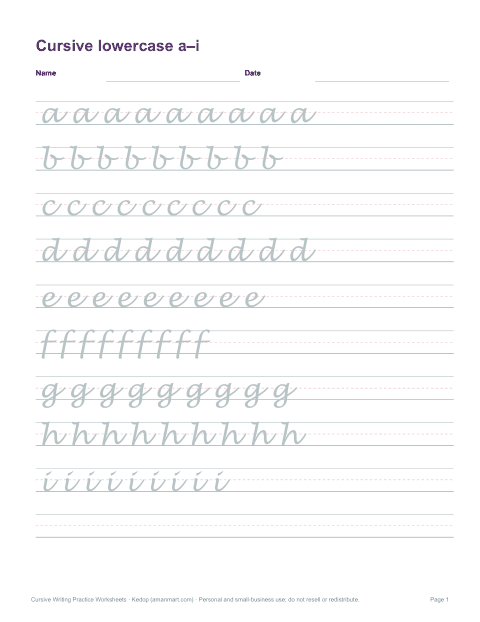
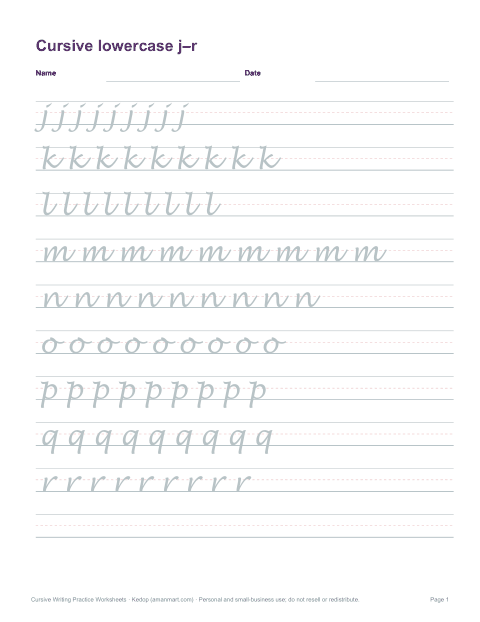
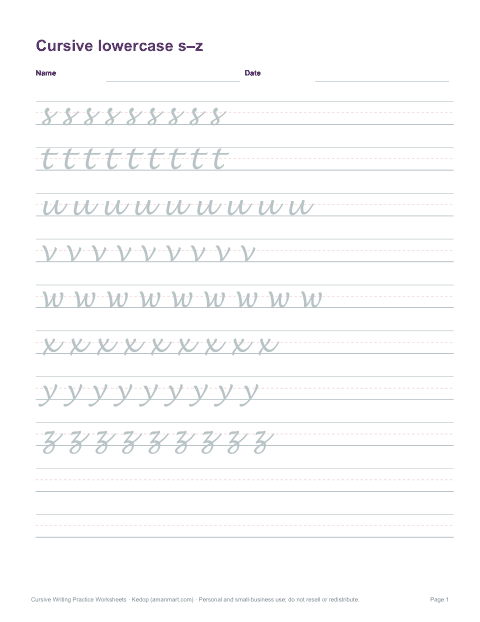
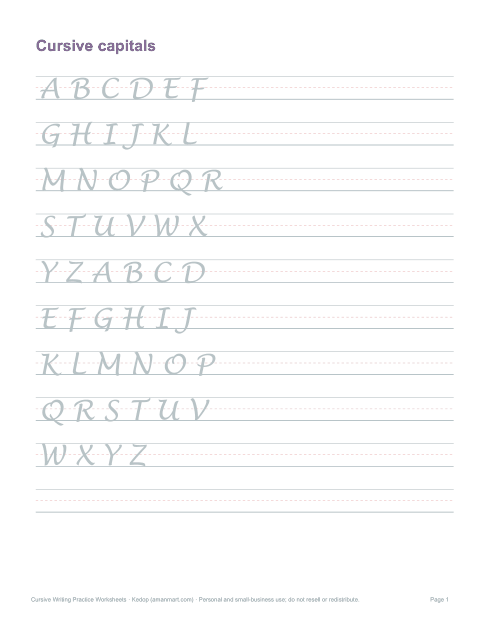
Cursive Writing Practice Worksheets
Lowercase (in three sheets), uppercase, joins, words and sentences to trace and copy, blank cursive paper and a progress chart.
- Lowercase a–i (PDF, DOCX)
- Lowercase j–r (PDF, DOCX)
- Lowercase s–z (PDF, DOCX)
- Uppercase A–Z (PDF, DOCX)
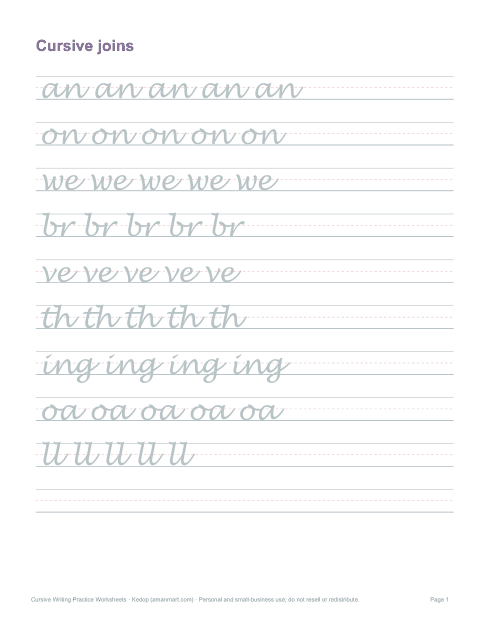
- Letter joins (PDF, DOCX)
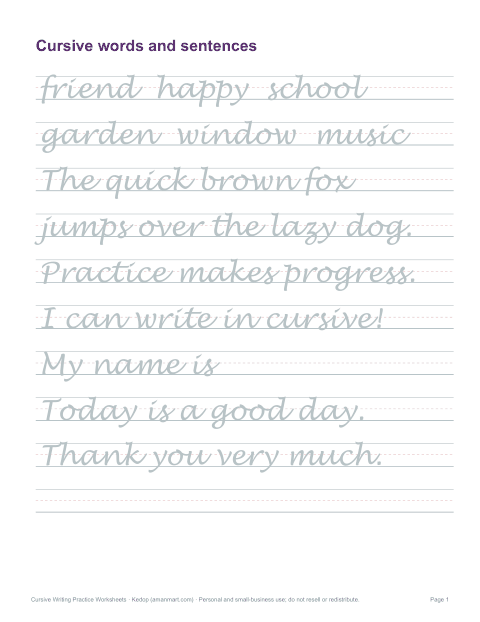
- Words & sentences (PDF, DOCX)
- Blank practice paper (PDF, DOCX)
- Progress chart (PDF, DOCX)
Formats: PDF, DOCX. Instant download after payment (link valid 72 hours, up to 5 downloads). AI-assisted: the templates were drafted with AI help and reviewed and laid out by Kedop.
$6.00 USD, one-time
Secure card checkout by Stripe. Full refund within 7 days — see the refund policy and license.
What is in the pack
- Lowercase letters a–z — trace-and-copy rows on three-line handwriting guides.
- Uppercase letters A–Z — capital cursive forms with the same guides.
- Letter joins — practice for the connections that trip learners up: joining from o, v, w and b, and joins into letters like e and r.
- Word practice — common words and names written in cursive to trace, then copy.
- Sentence practice — pangrams and short sentences to build fluency.
- Blank cursive practice paper — lines with a dashed midline in two sizes.
- Progress chart — tick off letters as they are mastered.
How to practise cursive effectively
- Start with lowercase letters grouped by stroke: letters that start with an undercurve (i, t, u, w, r, s), overcurve letters (n, m, x, v, y, z), downcurve letters (a, d, g, o, c, q) and loop letters (e, l, h, k, f, b).
- Trace slowly, keeping the pencil on the paper through each letter.
- Copy the letter on the blank lines beside the tracing, paying attention to where it starts and ends.
- Move to joins once individual letters are comfortable.
- Write whole words, then short sentences, aiming for even slant and spacing.
- Keep sessions short — 10 to 15 minutes a day works better than one long session.
Why learn cursive
Cursive handwriting links letters so the pencil rarely leaves the page, which many people find faster and more comfortable for longer writing. Some educators also value it for fine-motor development, for reading historical documents and letters, and for developing a personal signature. Several US states have reintroduced cursive into their standards in recent years, so many families and teachers look for structured practice materials.
Tips for parents and teachers
- Check pencil grip first; a relaxed tripod grip makes flowing strokes easier.
- Tilt the paper slightly — to the left for right-handed writers, to the right for left-handed writers.
- Model the letter while saying the stroke aloud: “up, loop, down, and up”.
- Praise consistent slant and size rather than perfect shapes.
- Use a dry-erase sleeve over a worksheet for repeated practice without reprinting.
Left-handed writers
Left-handed learners often write cursive comfortably when the paper is angled to the right, the hand is kept below the writing line to avoid smudging, and the pencil is held a little higher up. The worksheets work for both hands; if a left-handed child prefers a more upright slant, that is fine as long as it is consistent.
Formats
Every worksheet is a print-ready PDF (US Letter, also printable on A4) and an editable Word file, so teachers can swap in spelling words or student names. The tracing text uses a flowing handwriting typeface as a model; many school programmes teach slightly different letter shapes, so follow your curriculum's style where it differs.
A four-week practice plan
Week one covers undercurve and overcurve lowercase letters, a few each day. Week two covers downcurve and loop letters and reviews the first group. Week three focuses on joins and short words, using names and spelling words for motivation. Week four introduces capitals and full sentences, finishing with a short paragraph copied in best cursive. The progress chart in the pack lets learners colour each letter as they master it, which makes the steady progress visible.
Frequently asked questions
What age should children learn cursive?
Many schools introduce cursive around ages 7–9 (grades 2–3), after print handwriting is secure.
Which letters should I start with?
Start with simple undercurve letters such as i, t, u and w, then move to other stroke groups.
Can I add my own words?
Yes, the Word files are editable, so you can type in spelling words or names.
Does this match my school's cursive style?
It uses a common modern cursive style. Letter shapes vary between programmes; follow your school's model where it differs.
Was AI used?
The worksheets were drafted with AI assistance and then reviewed, edited and formatted by Kedop.